Paranormal ProductsInstruments, made by one hand since 2003
Paranormal Products · est. 2003

The most powerful psychic instruments ever crafted

Talking boards, planchettes, dial plates, dowsing tools and pendulum boards, made one at a time by one hand, numbered, cased, and entered in a register. Use their powers wisely.

The catalogue   Commission
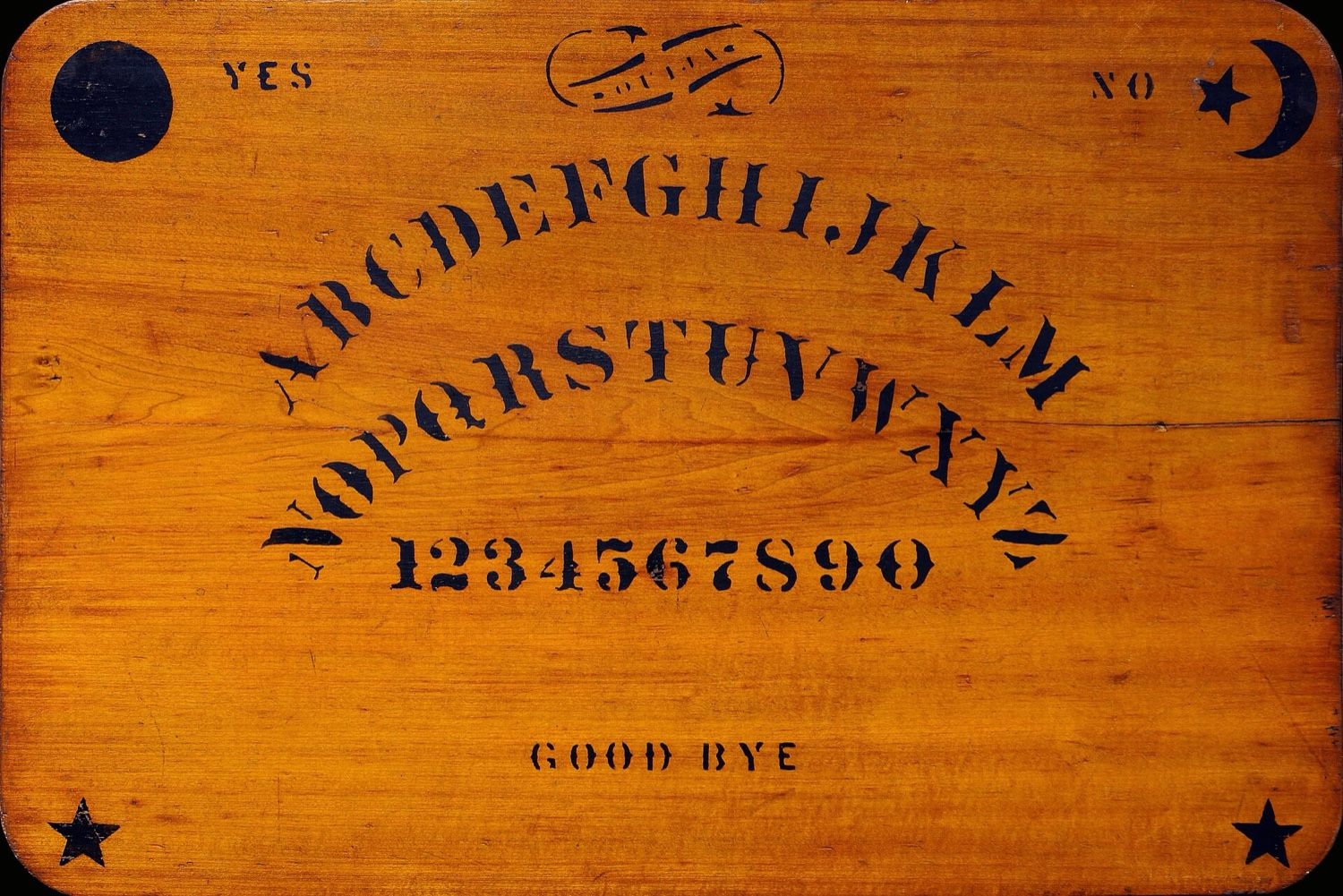
An original Kennard Novelty Company talking board, Baltimore, made before the OUIJA trademark was granted in February 1891: stencilled maple, sun and moon, YES and NO, the alphabet in two arcs, the numerals, GOOD BYE.

An original Kennard board of about 1890, with one of my pointers upon it. The timber changes each time the page is opened: bloodwood, dragon's blood, purpleheart, ebony, rosewood, zebrawood, granite. Watch it long enough and it will spell.

The HouseWhat This Is

Behold, the most powerful psychic instruments ever crafted. I wrote that on a banner twenty years ago, half in jest, and I have spent the two decades since trying to make it true.

What you will find on these pages is not a shop in the usual sense. It is a workshop's register: every instrument I make for the séance table, the writing pad, the dowser's field and the investigator's bag, each described to the standard I would want if I were the one buying, which is the only standard I have ever found reliable. The talking board and its pointer. The automatic-writing planchette, the oldest of them all. The dial plates and spiritoscopes of Robert Hare, rebuilt from his plates of 1855. The L-rod and the pendulum and the board that reads them. And the exotic tier, where a cabinet, a trumpet, a black mirror and a hand of bone china wait for the few who will know what to do with them.

They are expensive. They are expensive because each is made once, by hand, to a proportion that was old before Pythagoras, in timbers that take a year to season and a week to finish, with brass I cast and turn and felt I cut by eye. A board of mine will outlast the house it sits in. It is meant to be handed down, and the register on this site exists so that it can be, with its number and its date and the name of the person who first opened it.
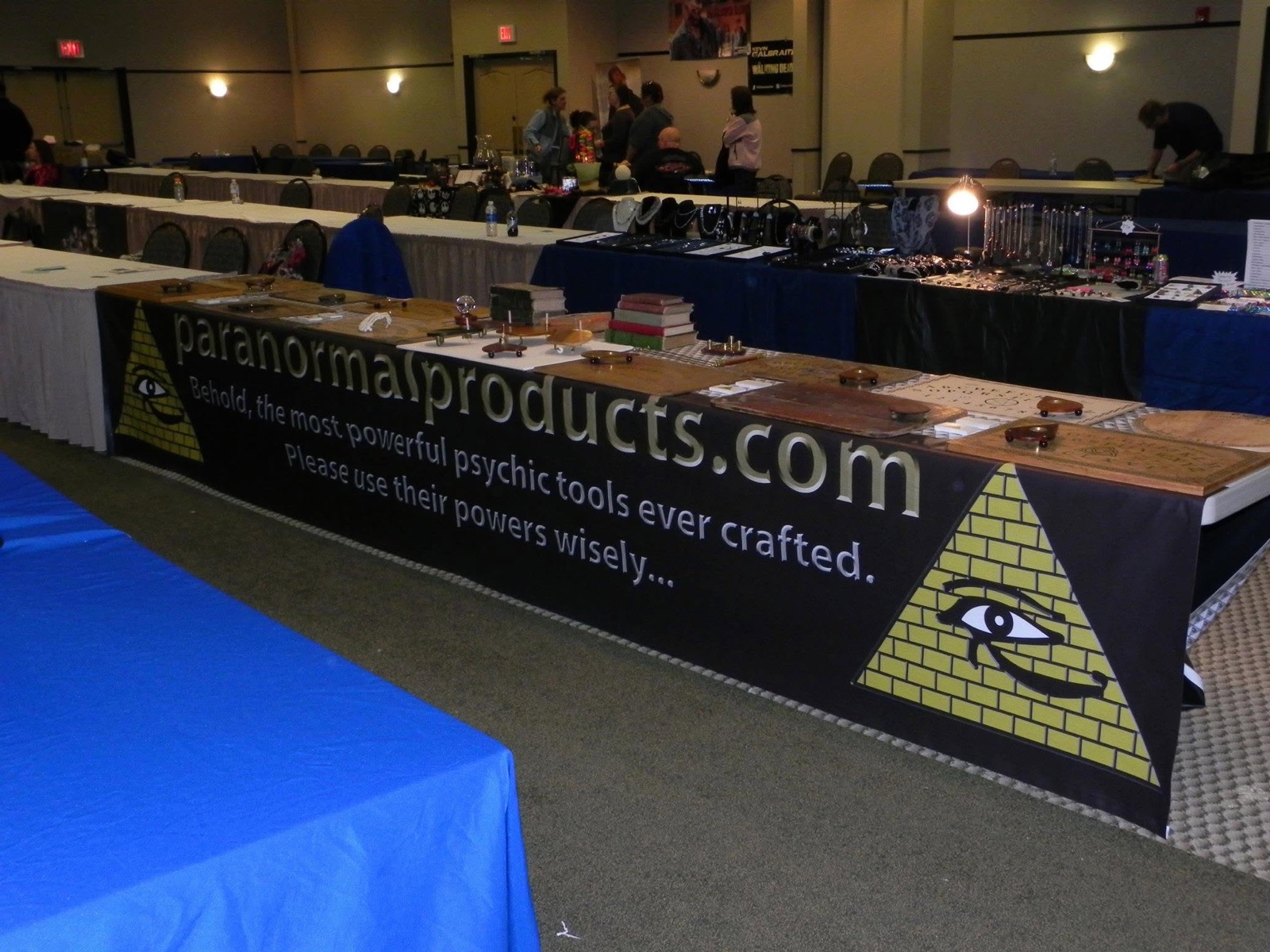
The table, Phenomenology 105
The table, Phenomenology 105Twenty feet of instruments under the banner that has followed me to conventions for two decades. Every board and pointer on it was made by hand in one workshop.
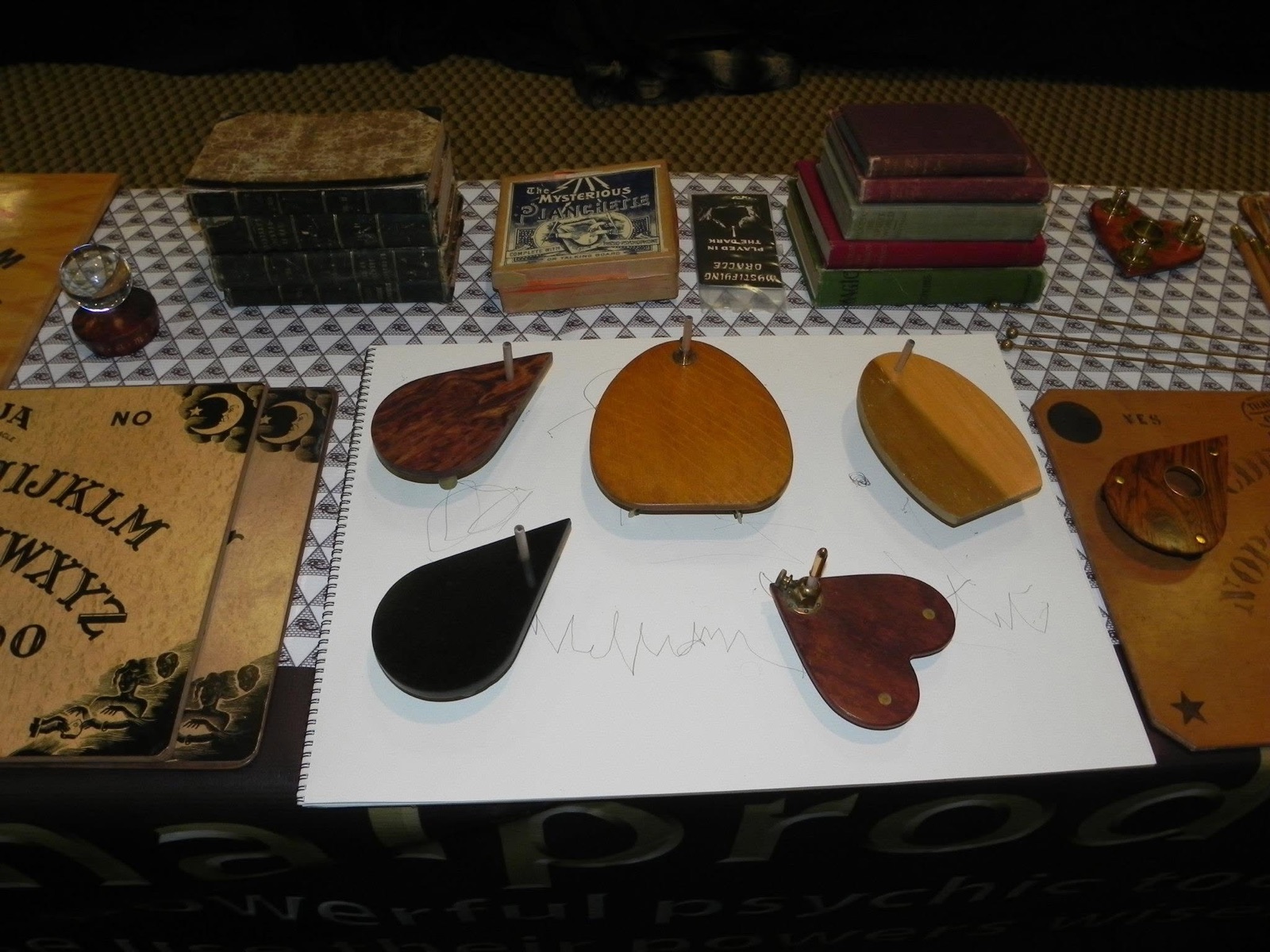
Automatic-writing planchettes on the pad
Automatic-writing planchettes on the padFive writers in five timbers, a boxed Mysterious Planchette of the 1920s behind them, and the script the sitters left on the paper during the day.

Three things I will not do

I will not tell you what the instrument detects. A pointer moves because hands move it; a pendulum swings because a wrist trembles; a dial turns because a cord is pulled. Where the impulse comes from is a question four centuries of serious people have failed to settle, and I am not going to settle it on a product page. My instruments are built so that whatever is moving them can move them cleanly. That is the whole of my claim, and I make it without apology.

I will not make a cheap one. There is a version of every instrument on this site that costs a tenth of mine. I know, because I own most of them; the antique boards in these photographs are a collection assembled over twenty years for the purpose of learning what their makers got right. What they got right is on this site. What they got wrong, plastic pointers, printed boards, chains with play in them, is not.

I will not sell to a child, or to anyone who tells me they cannot tell what is real. The register asks your age. The method these instruments serve is a loosening of the seam between the self and the not-self, and for most adults that is a fascination and a discipline. For a few it is a danger, and the sale is refused.
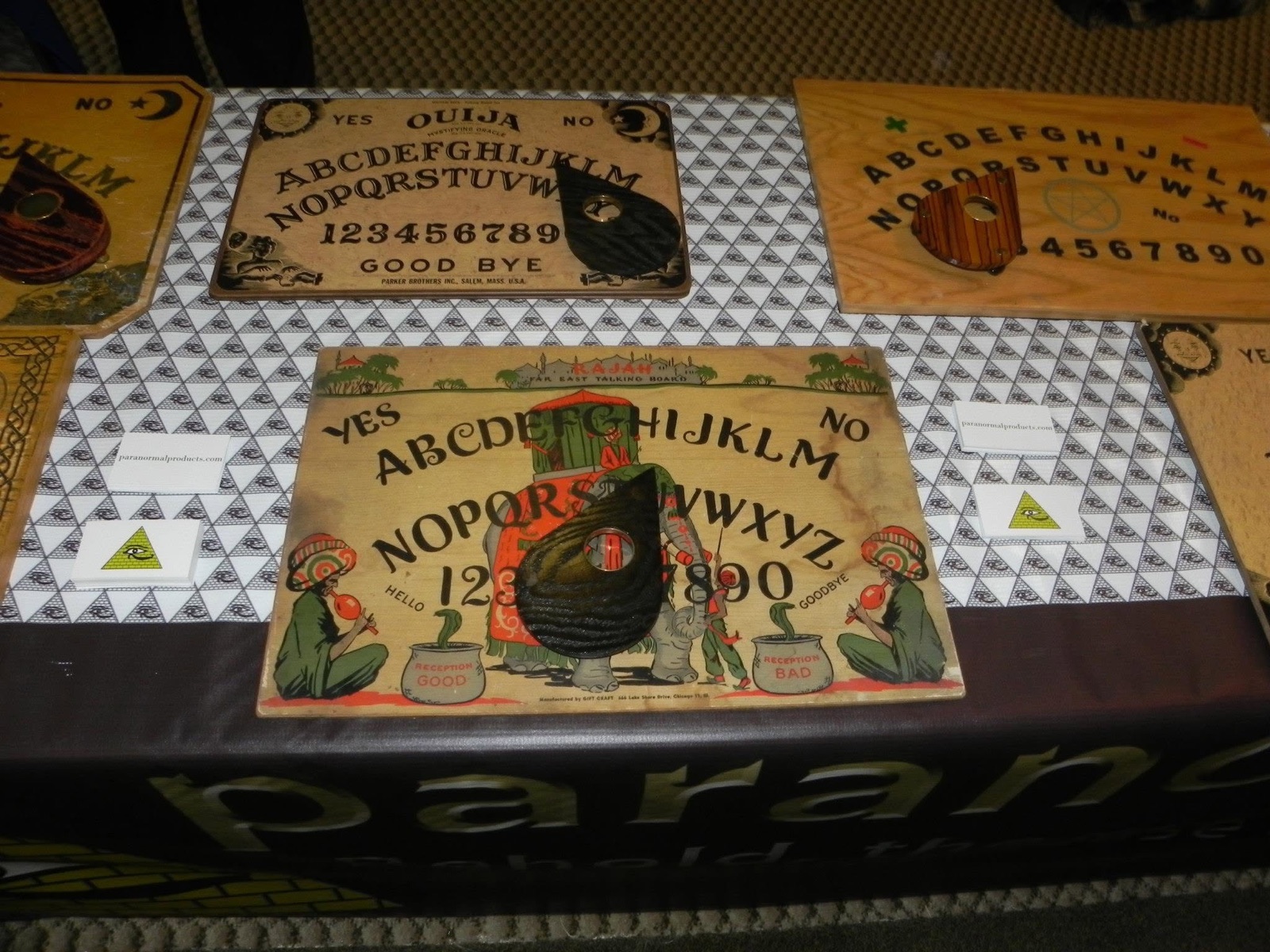
My planchettes on the boards that came before
My planchettes on the boards that came beforeA Parker Brothers Ouija, a Gift Craft Rajah of the 1940s, and a plain oak pentagram board, each carrying one of my pointers. I collect the boards to learn from them and cut my planchettes to fit any of them.
Boards of three eras, and a pair of L-rods
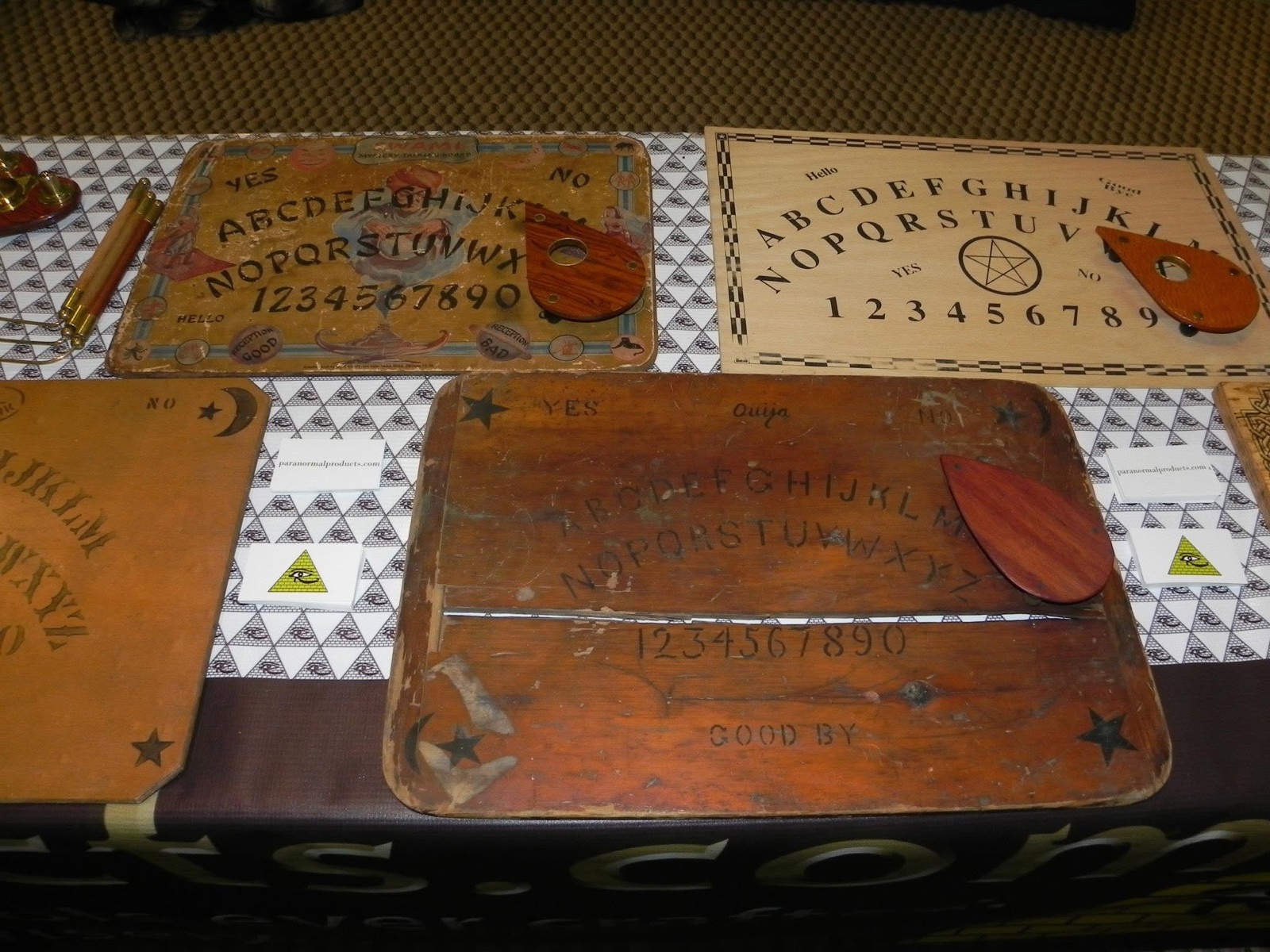
Boards of three eras, and a pair of L-rodsA 1940s Swami Mystery Talking Board, a modern pentagram board, and a hand-stencilled homemade Ouija from the early twentieth century, its GOOD BY cut by someone who had never seen the trademark. Brass L-rods at the left.

How a commission runs

You write. I answer with a drawing and a quotation, the current number, and a range of weeks. A deposit opens the number in the register. The instrument is made, photographed, and the photograph is sent before it ships, so that the piece you receive is the piece you saw. It arrives in its case with its certificate, and the register carries your name from that day, unless you ask it not to.

Pieces already finished are in the catalogue, priced, and can be reserved in the basket at the head of every page. The basket is this house's own; nothing from my other workshops ever appears in it.
The InstrumentsSeven Families

Why MineWhat Twenty Years Bought

The antique boards on this site were bought to be studied, and the study taught three things that no catalogue ever mentions.

The first is proportion. The boards that sit well under four hands are the ones cut close to the golden rectangle, and the makers who hit it did so by eye, the way a joiner sizes a drawer front. I cut to it deliberately, and I cut the planchette to the same ratio, so that the instrument and its pointer are the same shape at two scales. The materials page shows the figure.

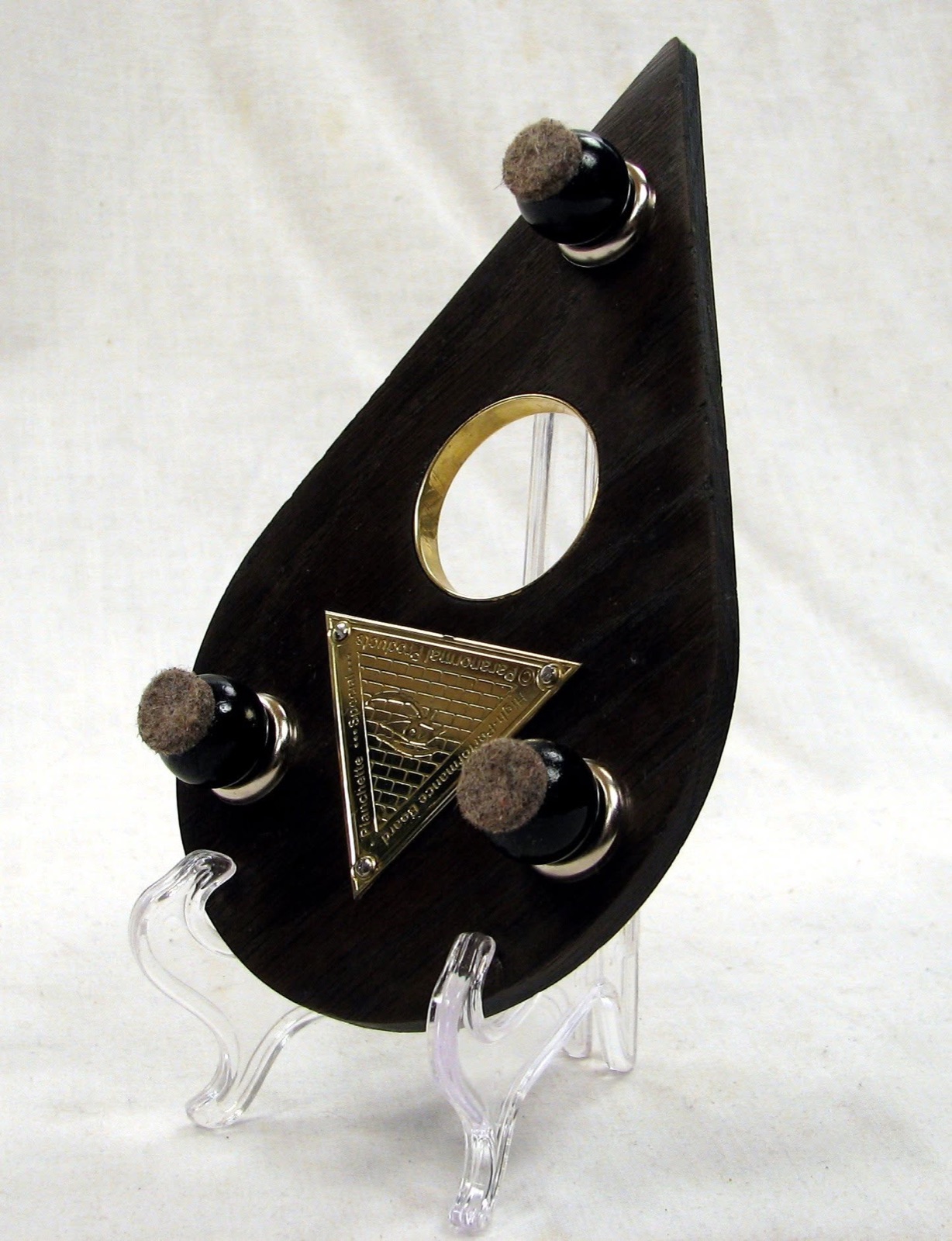
The second is the feet. A pointer that scrapes is useless, and a pointer that skids is worse, because it goes where it is pushed and nobody learns anything. The old Fuld planchettes had three felt pads on a wooden heart, and they were right; the plastic ones that replaced them were a cost saving that ruined the instrument. Mine have three turned brass feet under cut felt, set so that the pointer rests on a plane and not a point.

The third is the window. The eye needs a rim to read against. A bare hole is ambiguous by half a letter; a brass ring is not. Every pointer I make has one, lathe-turned from tube with a wall of thirty-two thousandths, and the letter sits inside it like a stone in a bezel.

The underside of a pointer planchette
The underside of a pointer planchetteThree turned feet shod in felt, a brass lens ring, and the engraved brass plate. The feet are what you are paying for: they decide whether the piece glides or scrapes.
A William Fuld Ouija with one of my pointers on it
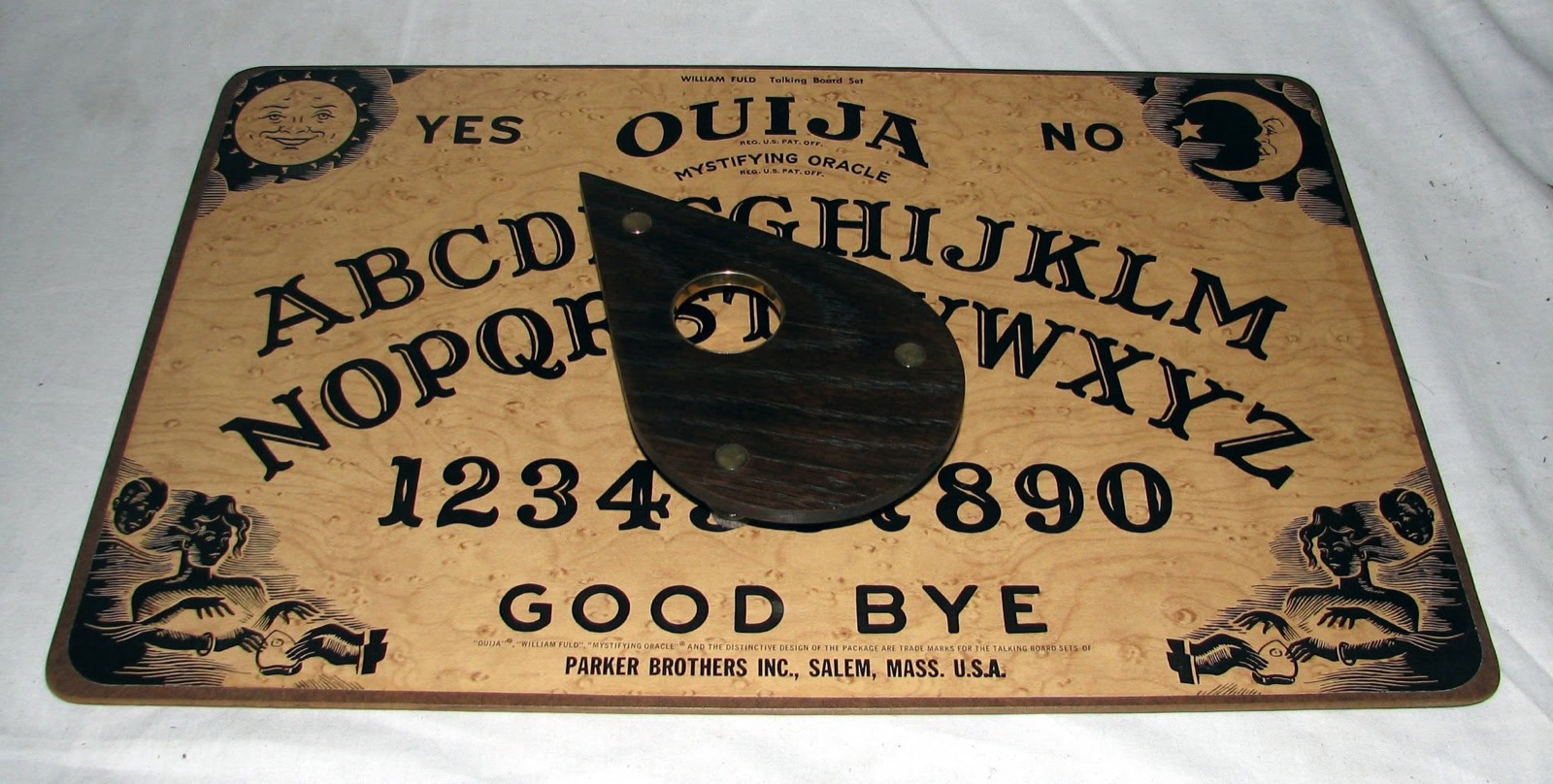
A William Fuld Ouija with one of my pointers on itThe Parker Brothers issue of the Fuld board, birdseye maple, and an ebonised oak pointer of mine sitting where its own plastic one used to. The brass ring is the window.

CommissionOpen an Instrument

Name the instrument, the timber, the stones, the wording, and what you intend it for. I reply with a drawing, a quotation, the current number in the register, and a date range rather than a date, because timber and the sky both keep their own time.

The RegisterEnter Your Name

The register is written to when a numbered instrument is completed, when one becomes available, and when a new family is opened. It is never sold and never lent.

Occasional, and never passed on.