ParisThe Little Board
The planchette is older than the board it is now sold with, and it was never meant to point. It was meant to write.
Paris, 1853. The tables of the spring rapped and turned, and by summer somebody had fitted a pencil to the leg of an upturned basket and was getting sentences. Within months the basket had become a small heart-shaped board on two castors with a pencil through its nose, and within a decade it was in every parlour in Europe and America. Allan Kardec's Spirits' Book was dictated through one. The word is French for little board, and that is all it is.
What it does is simple to state and hard to make well. The hands rest on the board; the board rests on castors and a pencil point; the smallest motion of the fingers becomes the pencil's largest, because the pencil is at the apex and the castors are at the base, and the geometry multiplies. Everything the sitter cannot feel themselves doing, the pencil records. Over a session the marks go from scribble to loops, from loops to shapes that look like letters, from letters to words. It is the most patient of all the instruments and the one that leaves a record, which is why it is the one I recommend to anyone who intends to take the practice seriously rather than to be entertained by it.
What I MakeHeavy, Proportioned, Quiet
Made as it should have been made then
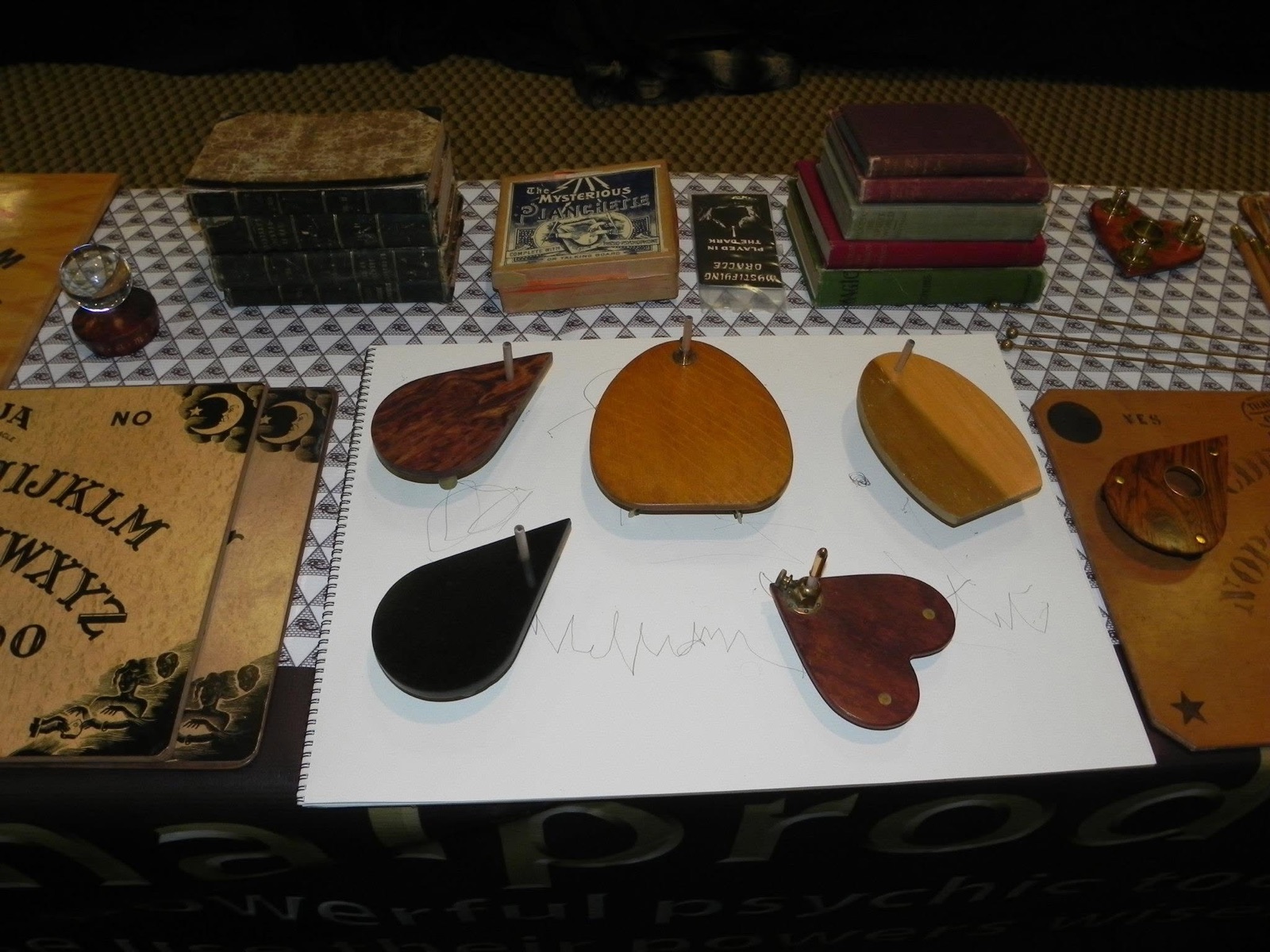
The Victorian planchettes were made by the thousand, in cheap wood, on hard castors that chattered across the paper. The one in the boxed set on the photograph below, a Mysterious Planchette of the 1920s, is typical: thin, light, and skittish. A light planchette writes small and fast and mostly rubbish, because the sitter's tremor is transmitted before their intent. A heavy one writes large, slow, and legible. This is the single most important thing I have learned about the instrument, and it is the opposite of what the trade has done for a hundred and seventy years.
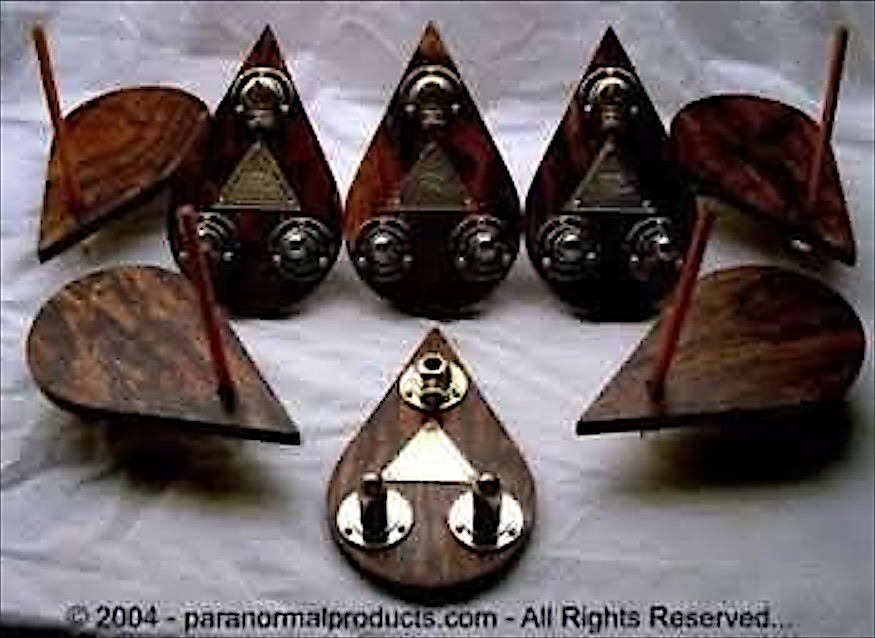
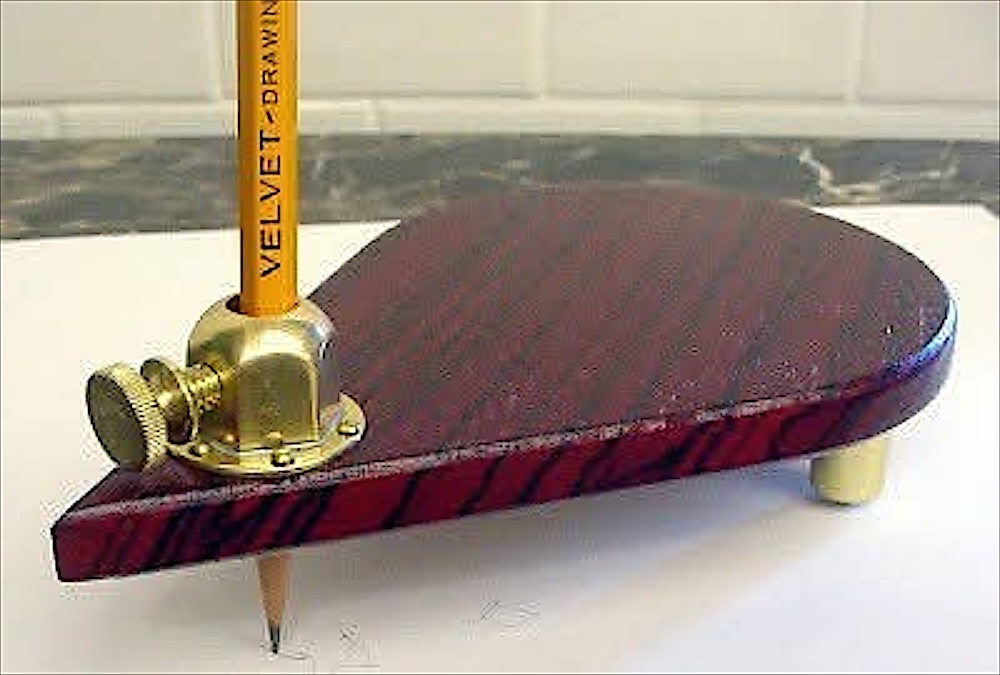
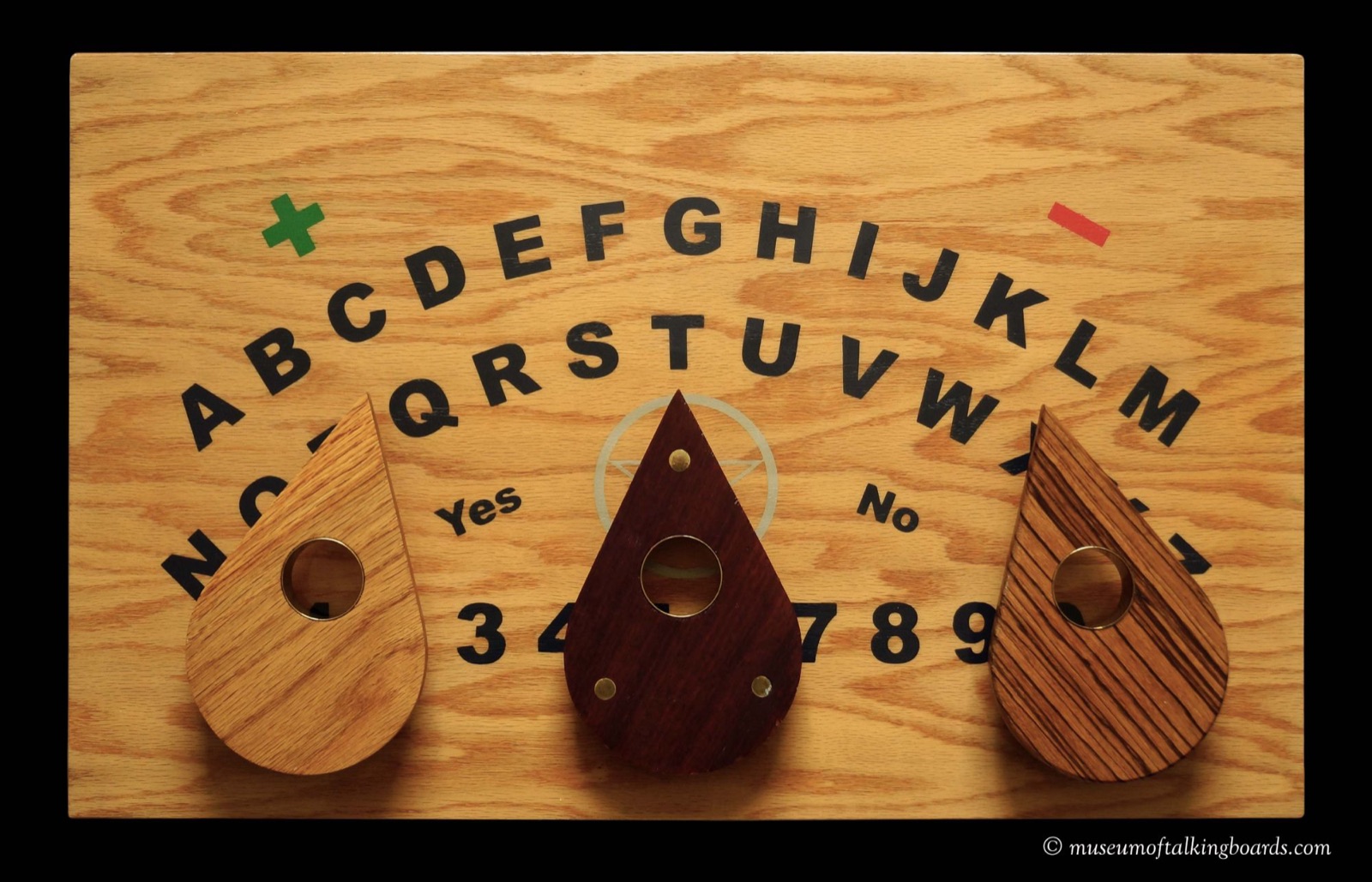
So mine are heavy. They are cut from dense hardwoods, bloodwood, purpleheart, rosewood, ebony, or from solid glass to the 1860 pattern, or from stone. They are cut to one to phi, the width to the height, so that the hand finds its place on them without looking. They run on three brass feet rather than castors, turned in my shop, so that they glide instead of rolling and never chatter. The pencil clamp is solid brass with a thumbscrew, set so that the point touches the paper by a hair and no more, and it will hold a pencil, a stylus, a brush or a pen.
The finish is either the timber's own colour under oil and wax, or dragon's blood, which is the resin of a tree dissolved in spirit and built up in coats until the grain glows red through it. The red planchette is the one people ask for by name. The photograph of the raw resin is on the materials page; the tree it comes from grows on an island off Yemen, and the colour has been used on violins and reliquaries for as long as there have been either.
The specification
- FormTeardrop or heart, cut to 1 : 1.618. Standard 7 inches on the long axis; a large model at 9 inches for two sitters.
- TimberBloodwood, purpleheart, rosewood, ebony, walnut, zebrawood. Solid glass to the 1860 pattern. Blue pearl granite, marble, serpentine.
- FeetThree, turned brass, under cut felt for paper; polished for glass.
- ClampSolid brass with thumbscrew, made in-house. Takes pencil, stylus, brush or pen.
- FinishOil and wax; or dragon's blood in spirit, built up and rubbed back.
- Supplied withA quire of large smooth paper, a fitted case, the written method, its certificate and its number.
UseTwenty Minutes
On use, briefly
Twenty minutes, at a table, in ordinary light, with a companion who has agreed to time it and end it. The hand rests; the mind is given something dull to do, a page to read aloud, a list to count. The pencil is left alone. Whatever it does is kept, dated, and not interpreted until the following day. The full method, with what to do and what not to do, ships with the instrument and is on the channeling site at length. I will only say here that the people who get somewhere with this are the ones who keep the paper, and the people who do not are the ones who read it in the moment.