The NeedleThree Jobs
A pointer has three jobs: to glide, to show, and to weigh. The plastic one that comes in the box does none of them.
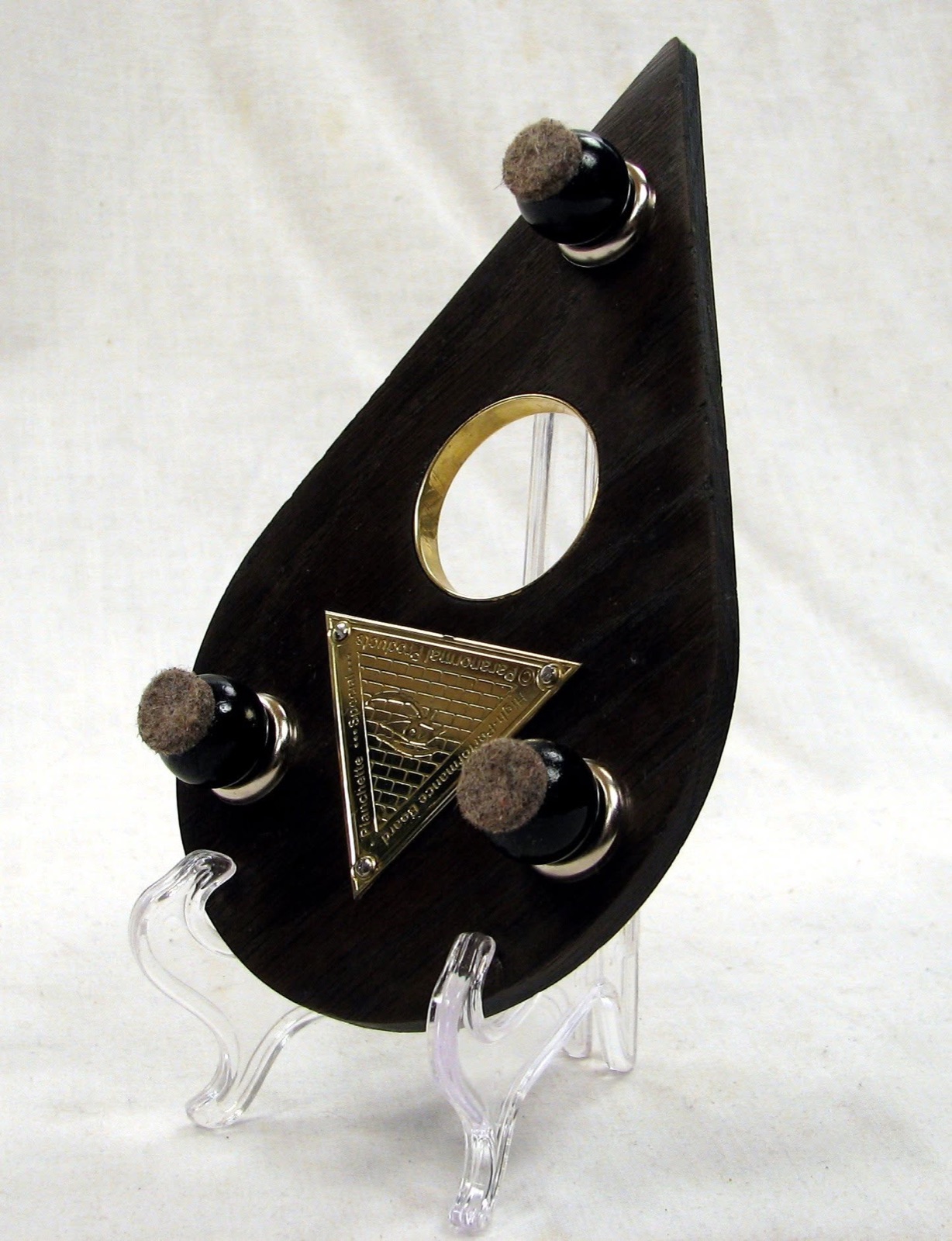
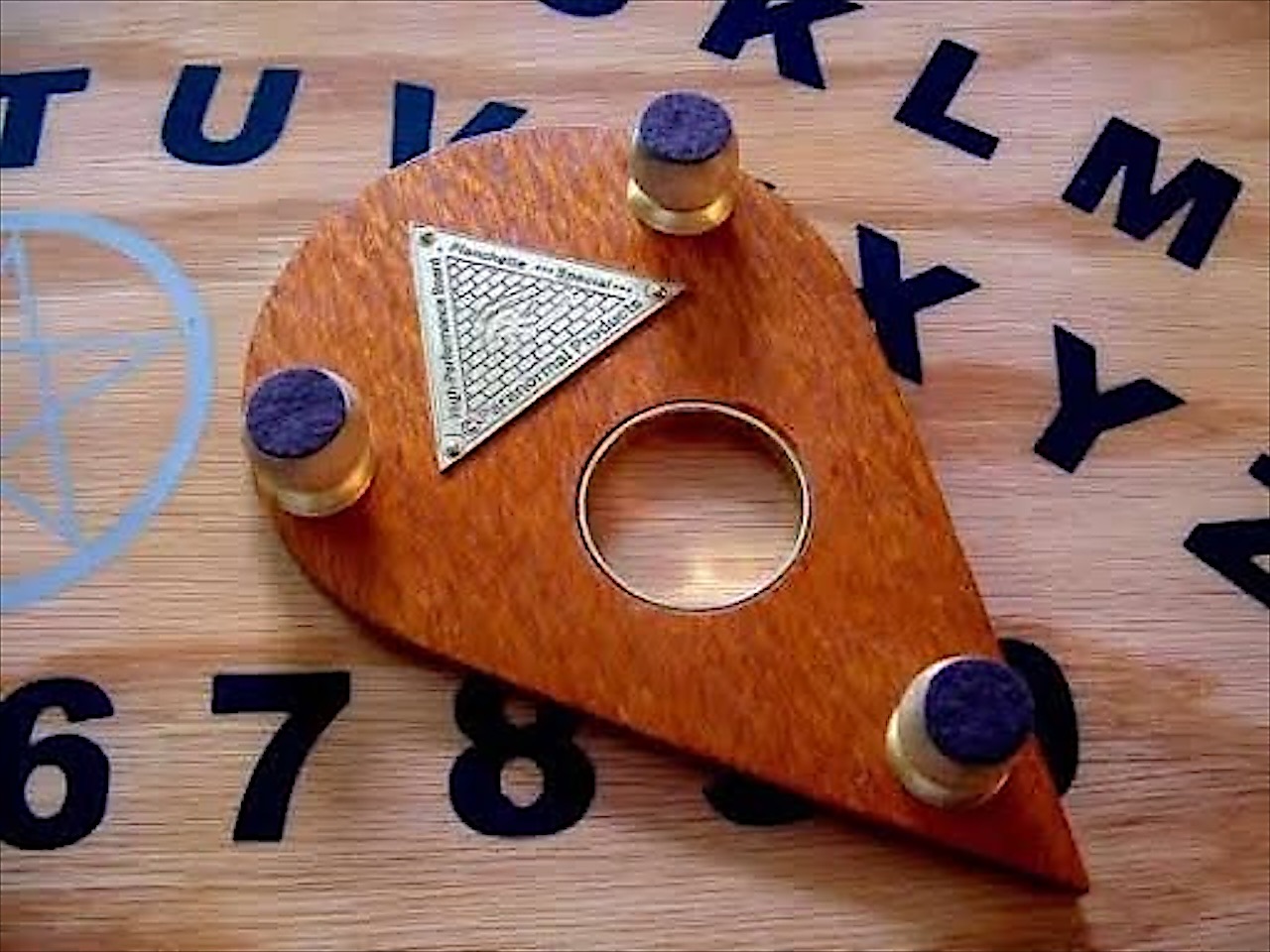
To glide it needs feet that neither scrape nor skid. Scraping stalls the pointer on the grain of the board and the sitters push through it, which means every push is theirs. Skidding lets it run, so it goes where the last hand sent it and overshoots the letter. The Fuld heart of 1900 had three felt pads and was right; mine has three turned brass feet under cut felt, on a plane rather than a point, and it moves under four fingers like a curling stone.
To show it needs a window with a rim. The eye reads a letter against an edge, and a bare hole in a piece of plastic has none; the reading is ambiguous by half a character and the sitters argue. A brass ring settles it. Mine are lathe-turned from thin-wall tube, thirty-two thousandths, so that the ring is a fine line and not a bezel, and the letter is centred in it or it is not, and everyone at the table can see which.
To weigh it needs mass. A pointer that weighs nothing transmits every tremor of every hand as a lurch; one with some heft integrates them into a movement. The hardwoods do this. Ebony, bloodwood, purpleheart and rosewood all sit in the hand with an authority that a plastic heart cannot. Stone does it better still, and I make pointers in granite and serpentine for the boards that are looked at as much as used.
Any BoardSized to Suit
For any board ever made
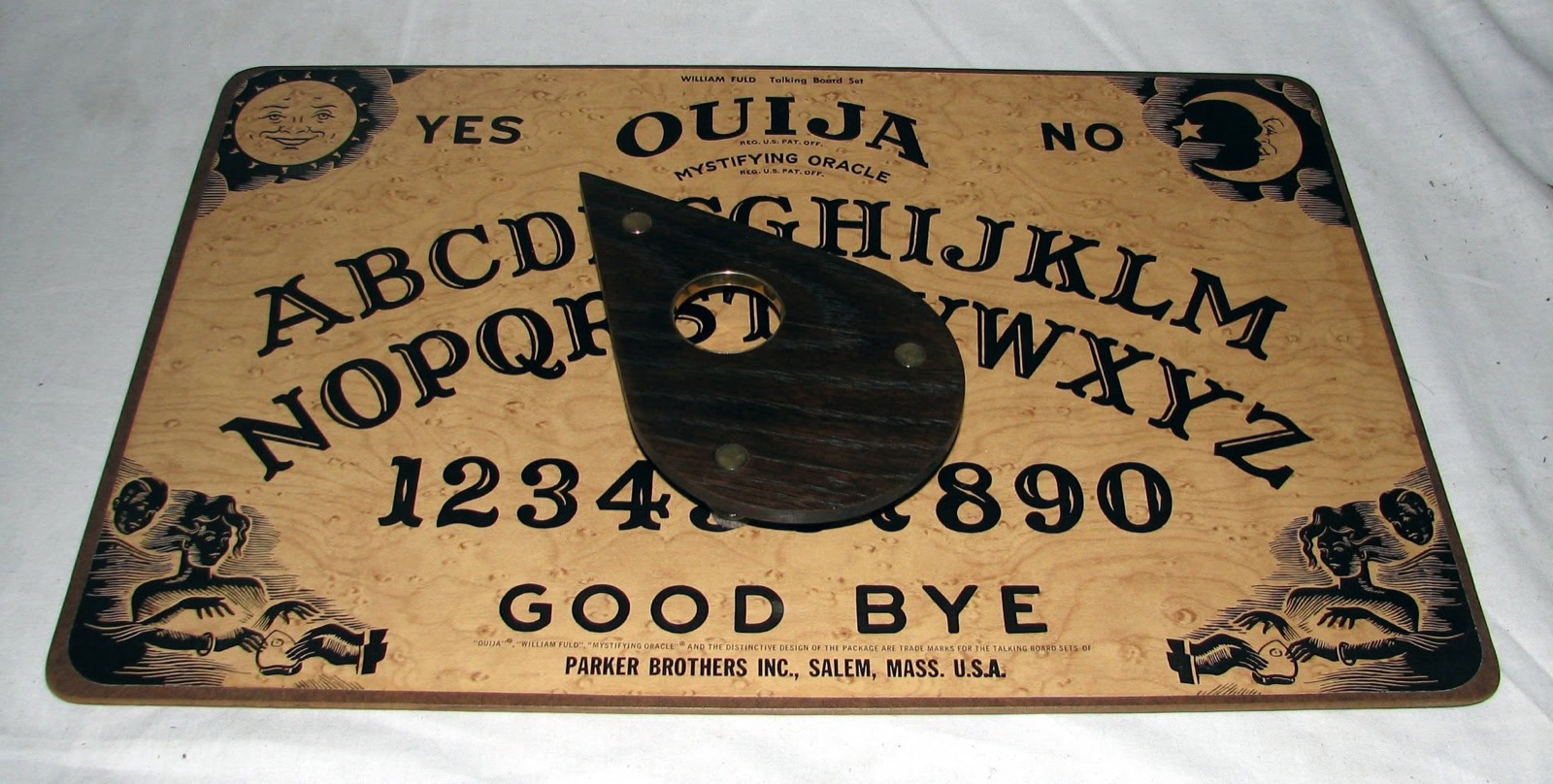
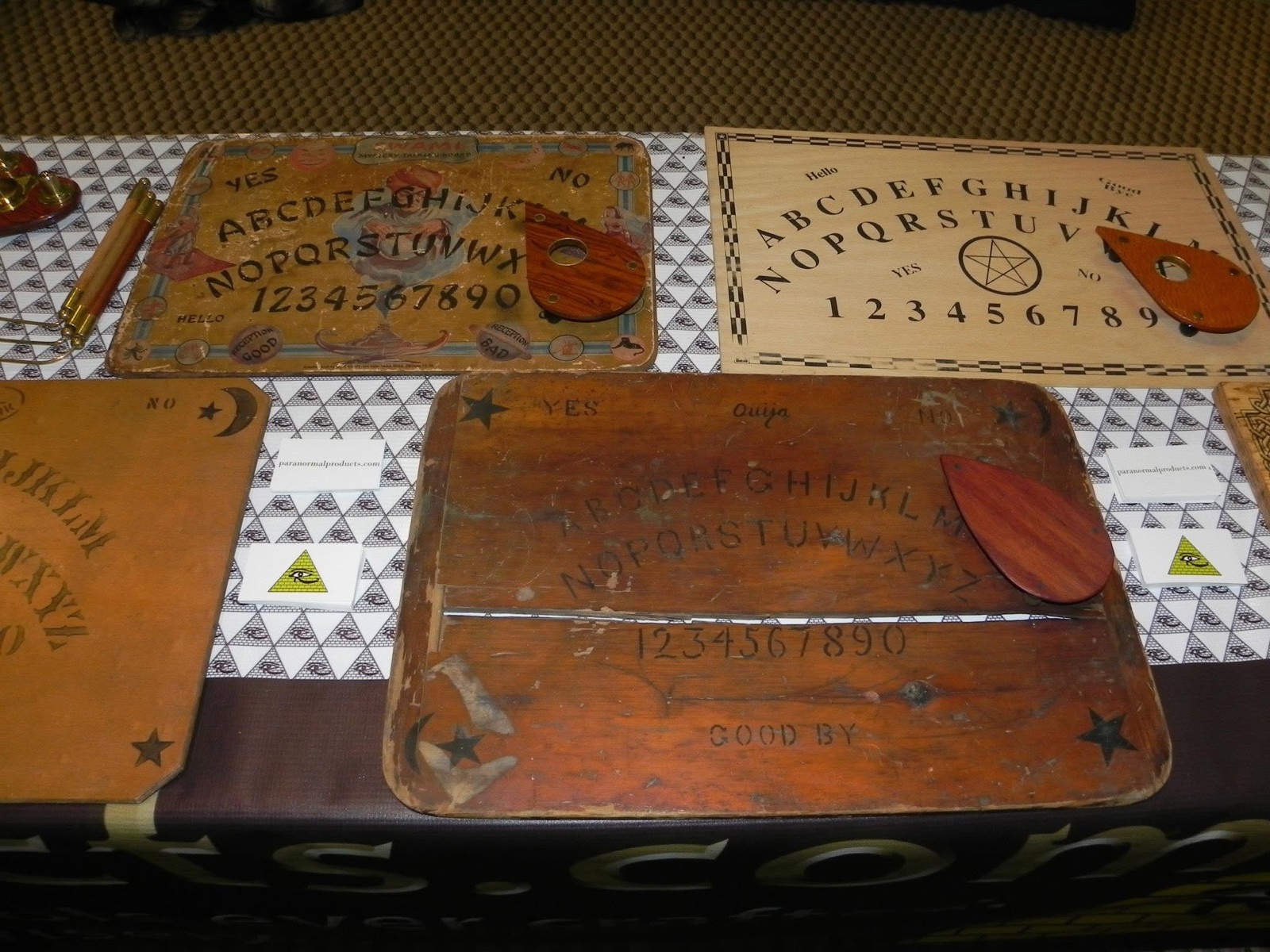
I make pointers for my own boards, and for everyone else's. The antique boards in the photographs, a Fuld, a Rajah, a Swami, a homemade stencil from the first years of the century, are all carrying pointers of mine, cut to suit them. Send a photograph of the board and its dimensions and I will size the pointer to it and choose feet for its surface. The plastic one that came with it can go in a drawer.
The plate on the underside is engraved brass, with the maker's name and the number. It is there so that in fifty years someone can find out where the thing came from.
The specification
- FormTeardrop or heart, 1 : 1.618. Sized to your board.
- Timber and stoneEbony, bloodwood, purpleheart, rosewood, zebrawood, walnut. Granite, marble, serpentine.
- WindowBrass ring turned from 0.032-inch tube. Glass lens to commission.
- FeetThree, turned brass, felt-shod; polished for stone or glass boards.
- PlateEngraved brass on the underside: the house, the number, the year.
- FinishOil and wax, French polish, or dragon's blood.
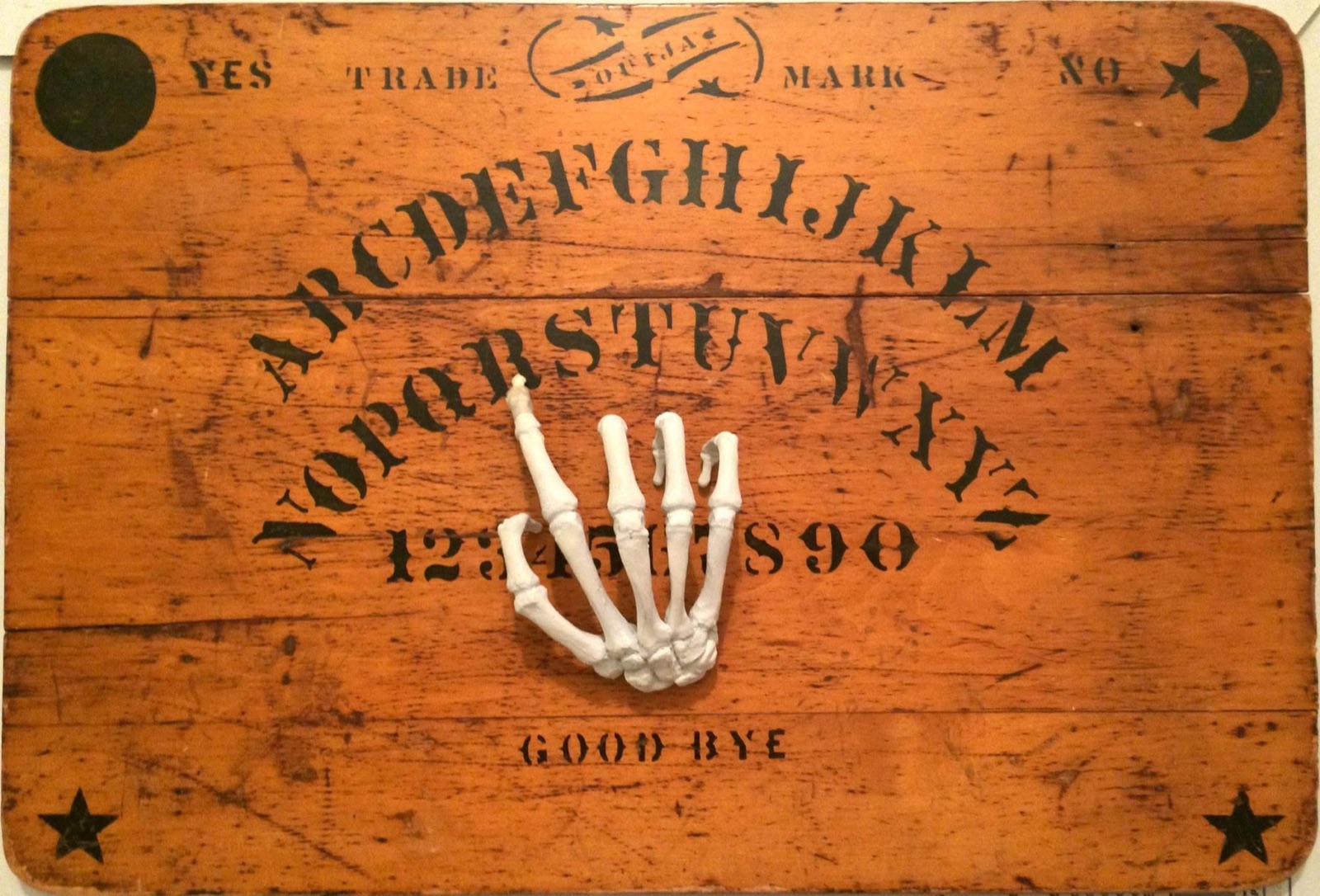
And for those who want the pointer to be the point: the skeletal planchette, a human hand in bone china, twenty-seven bones, that rides the board and taps the letter it stops on. It is on the exotic tier, and it is the only pointer I make that people photograph more than they use.