PhiladelphiaThe Professor
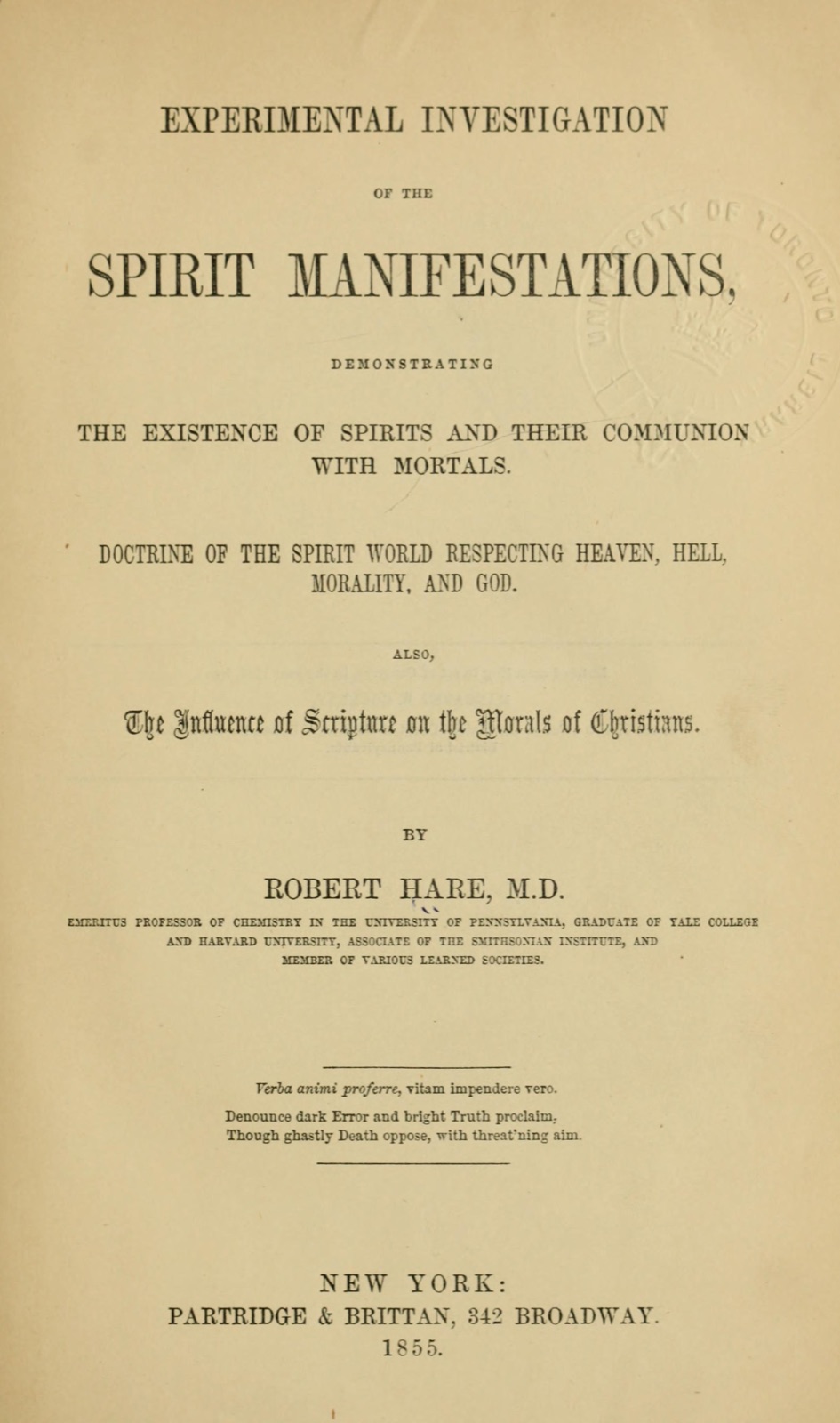
In 1853 a professor of chemistry at the University of Pennsylvania, inventor of the oxy-hydrogen blowpipe and one of the most respected experimentalists in America, sat down to expose the table-rappers. Two years later he published a book saying they had convinced him. Nobody has to agree with his conclusion to admire what he built to reach it.
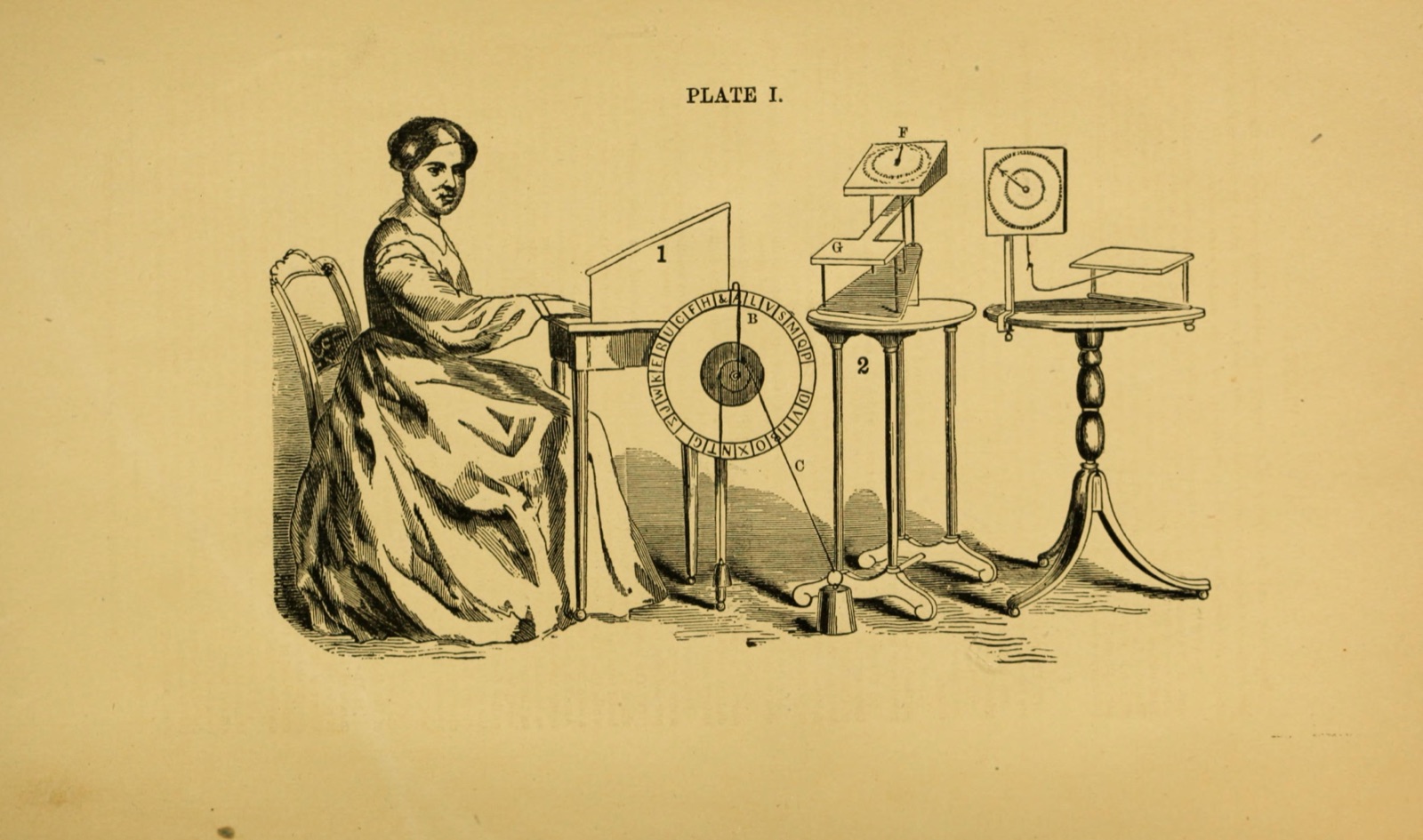
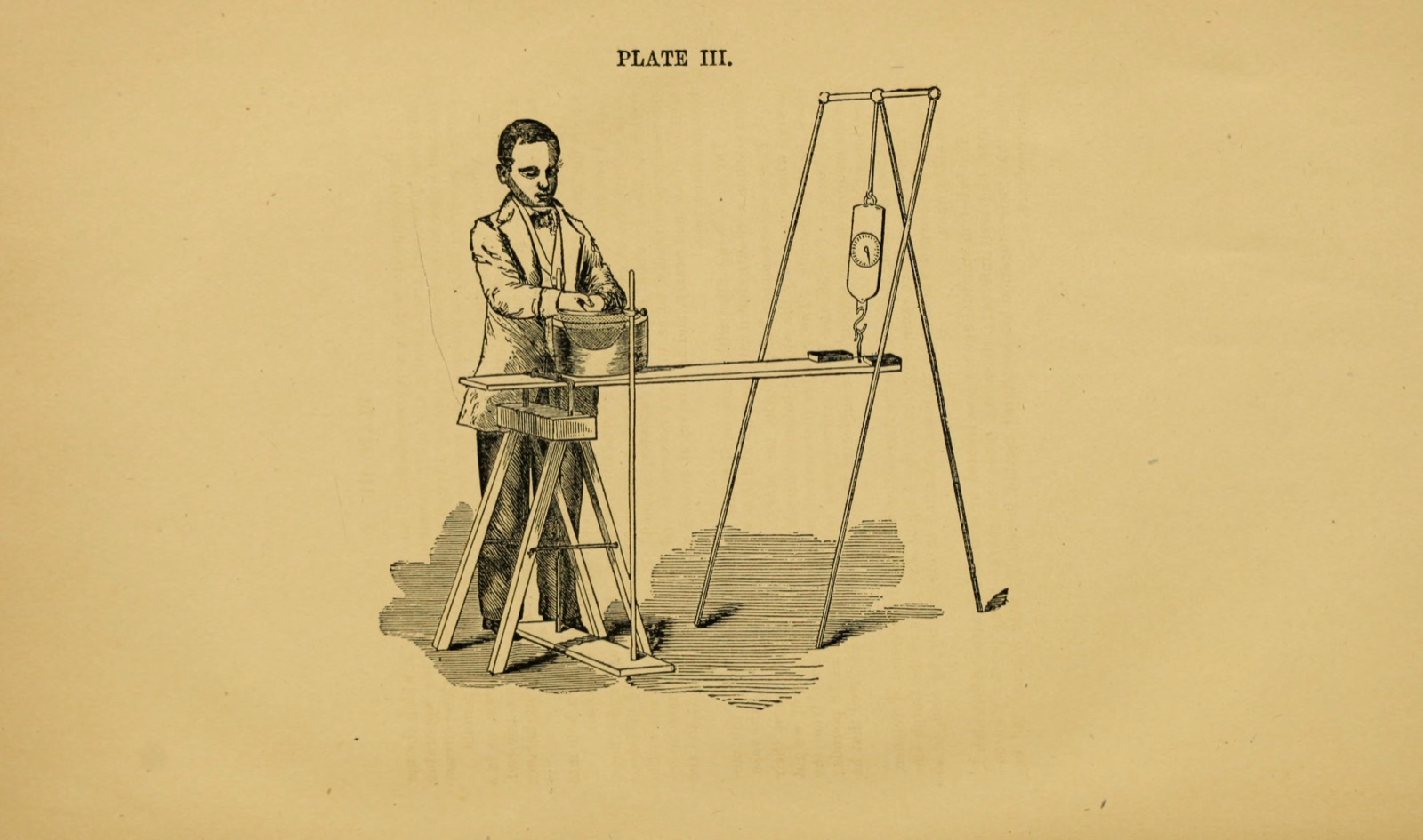
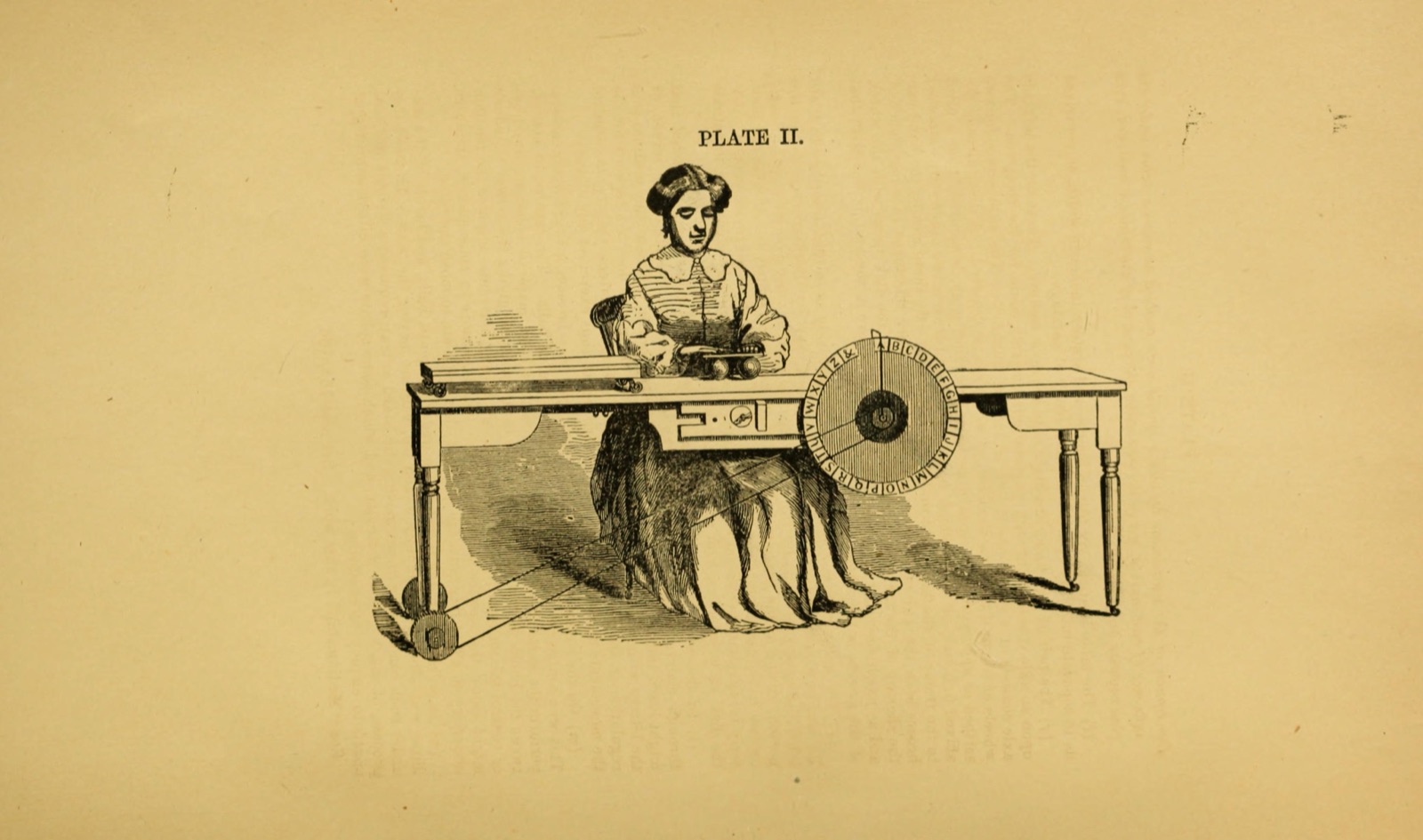
Robert Hare understood the one thing about the séance that nobody before him had acted on: it is uncontrolled because the medium's hands are on the thing that spells. So he built instruments that took the hands off it. A lettered disk on an axle, turned by a cord and counterweight, with the letters facing away from the medium so that she could not see what she spelled. A six-foot table on castors and an axle, the sitter's hands on a brass plate balanced on two balls, so that any push rolled the plate before it moved the table. A spring balance, counterpoised, so that a claim of force became a reading in pounds.
He called the dial instruments spiritoscopes. They were made for him by Philadelphia mechanics, engraved from photographs for the book, described to the sixteenth of an inch, and when he died they went wherever such things go. So far as I have been able to discover, no complete Hare instrument survives in any collection, and none had been made from his descriptions in a hundred and fifty years. I make them now.
What I MakeFrom the Book
Built to the plates
Every dimension comes from the book, which is in the public domain and which I would rather you read than take my word for. The disk is pasteboard on a wooden rim, as his was, more than a foot across, with the alphabet cut from a card and fixed at even intervals; the axle passes through the legs of a small table; the cord runs once round a pulley and carries two weights, eight pounds and two, on the floor. The index is fixed. The disk turns. The sitter's hands are on the table, or on the lever board of the later, smaller model, with the fulcrum line marked, and the mechanics of the thing mean that a downward press can do nothing but lift the far end of the board off the disk.
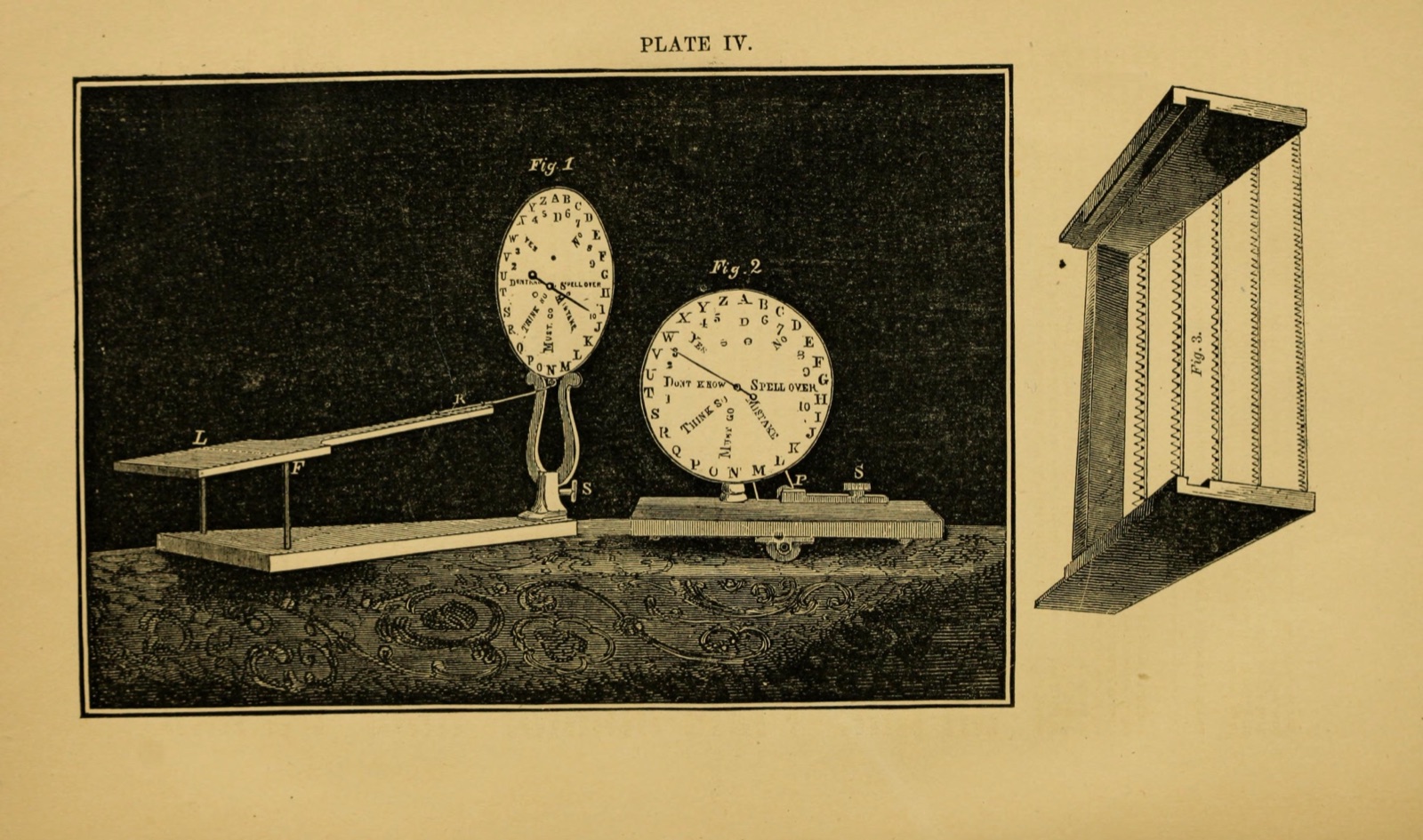
The later dial, the one Hare said suited feeble mediums and beginners, is cast iron on the cloth, a disk and an index, worked by the lever board. It is the spiritoscope proper and it is the one most people commission, because it sits on a side table and because it is, frankly, beautiful: a thing from a laboratory that has wandered into a drawing room.
These are the most demanding instruments I make. Delivery is the better part of a season for the test table. They are numbered, they are marked as reproductions, and each ships with a facsimile of the relevant plate and page, so that the owner can check my work against Hare's.
The instruments
- The Lettered DiskHare's first apparatus: the disk on its axle through the table, cord, pulley and weights, the fixed index. Pasteboard disk, hardwood table, brass fittings.
- The Lever DialThe later spiritoscope. Cast-iron dial and index on the cloth, lever board with the fulcrum line, in walnut or oak.
- The BalanceThe counterpoised spring balance, reading in pounds, on its stand. The instrument that made a claim of force into a number.
- The Test TableSix feet by sixteen inches, castors and axle, the grooved wheel and band, the brass plate on two balls. Made to order only; the better part of a season.
- Supplied withA facsimile of the plate and text it is built from, the certificate, the number.
The full account of Hare, his sittings and his apparatus, with the recollections of a visitor to those Philadelphia parlours, is on Spiritoscopes, the sister site devoted to nothing else.