Everything above this line is an instrument you might use on a Tuesday. What follows is not. These are the pieces made once or twice a year, for people who already own the rest, and each of them is a small argument about what a séance room ought to contain.
The skeletal planchette
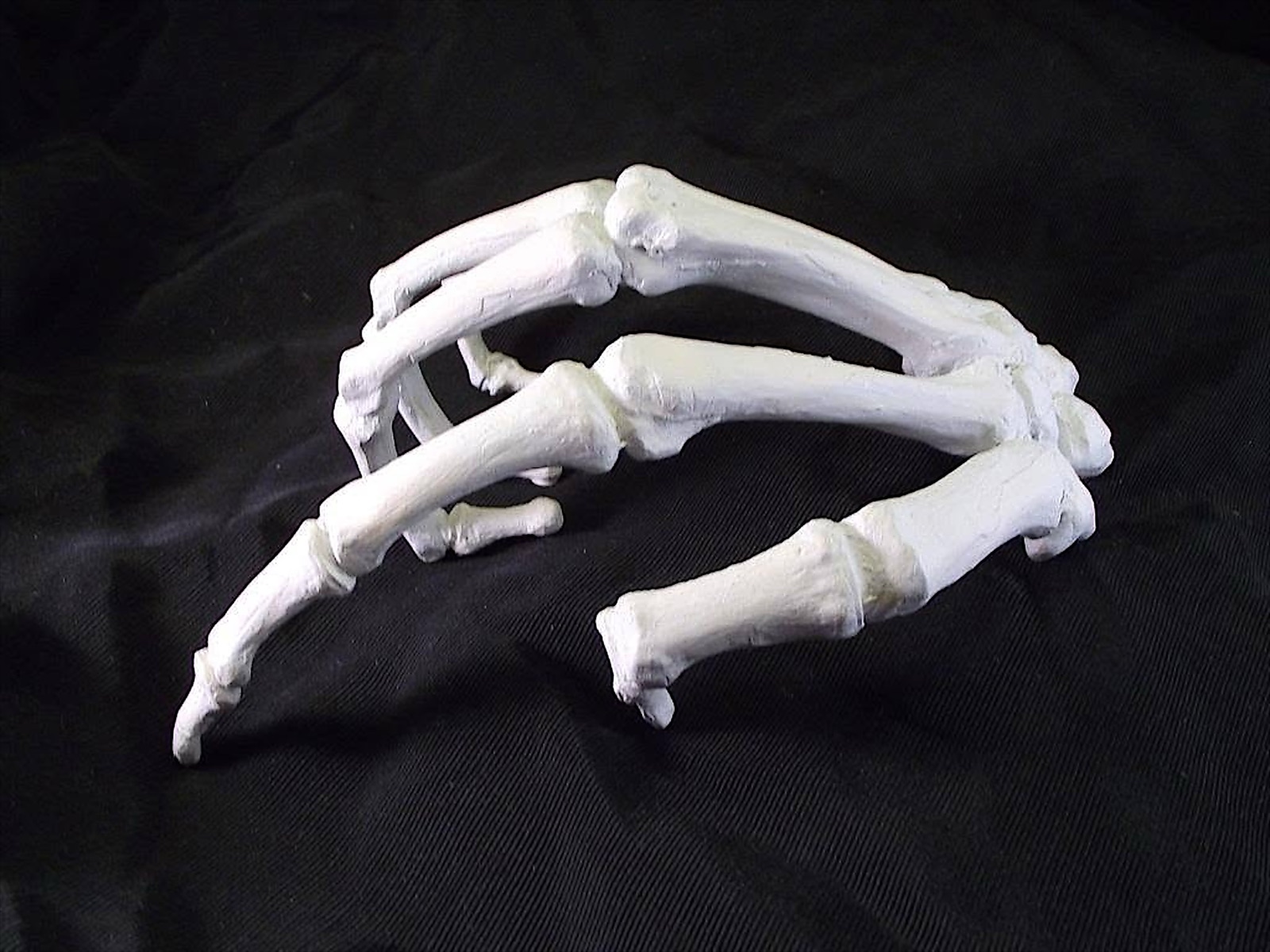
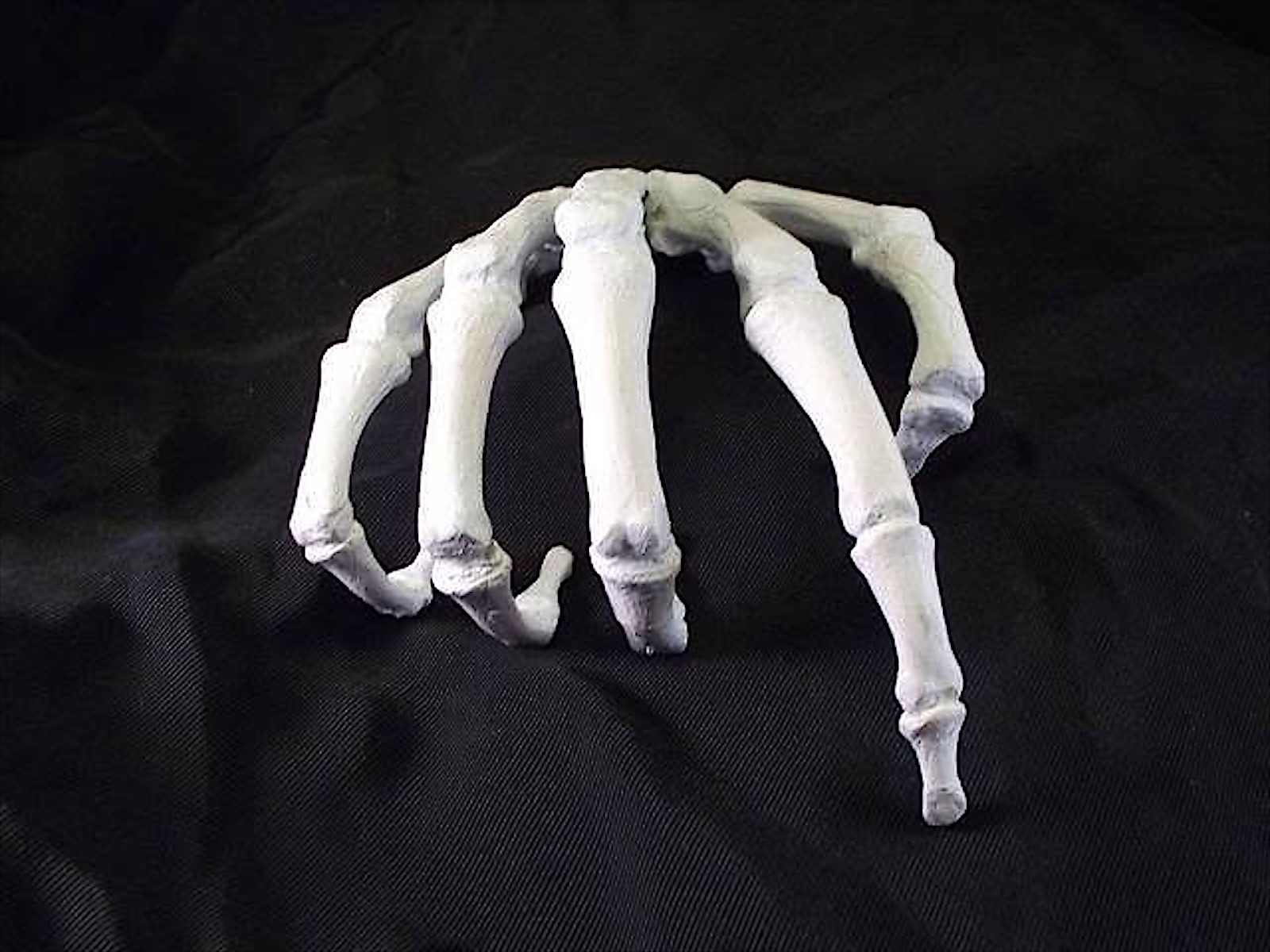
A human hand, life size, twenty-seven bones modelled from the skeleton and fired in bone china, that rides the talking board under the sitters' fingers and taps the letter it stops on. The carpals of the wrist in two rows, the five metacarpals, the fourteen phalanges; nothing stylised, a surgeon would find every landmark. The fingers are set in the relaxed curl of a hand at rest, so that the tips touch the board first and the tap is clean.
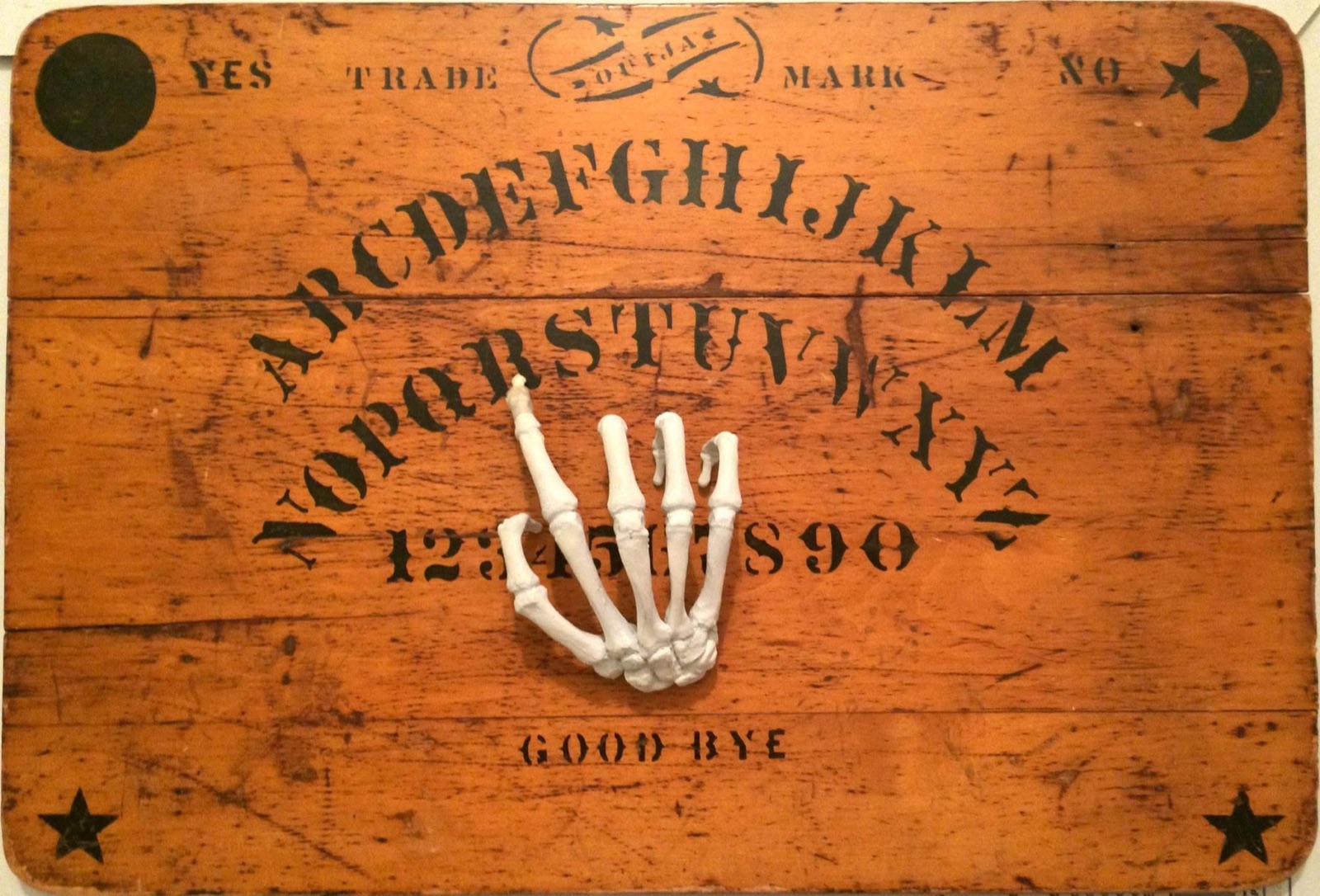
It is the only pointer I make that people photograph more than they use, and it was made for a reason beyond the photograph. Put a plastic pointer on a board and the setting is a game. Put a human hand on it and the room changes. That change is not supernatural. It is the oldest theatre there is, and a séance is theatre before it is anything else. It lives in a fitted black-lacquered case I call the Ossuary, and it has its own site, Skeletal Planchettes, where the anatomy is drawn bone by bone.
FurnitureThe Room Itself
The cabinet
The spirit cabinet of the 1870s was a curtained recess in which the medium sat tied, so that whatever came out of it could not be her. It was also, for the conjurers who exposed the mediums, the entire secret: a place the audience could not see. I make a cabinet for the sitter who wants the séance as it was, with the curtain, the chair, the rings for the cord, and the frame in oak or walnut that breaks down into panels for a car. It is honest furniture for a dishonest history, and I say so in the description.
The trumpet
The spirit trumpet was a cone of aluminium, sometimes with a luminous band, through which the direct voice was supposed to speak while it floated about the darkened room. Mine is spun brass, in three telescoping sections to the original pattern, with a hand-rubbed finish and a luminous band that is a proper radium-free phosphor. It amplifies a whisper across a room, which is all a trumpet ever did, and it is, as an object, one of the loveliest things in the house.
The mirror
A black scrying mirror is a piece of real optics: glass with a dark backing that reflects twice, a few millimetres apart, so that the eye is given nothing to focus on and the visual system begins to supply its own content. Mine are true obsidian, cut and polished flat, or optical black glass, in a turned frame with a stand, and they are described with the physics rather than the folklore, because the physics is more interesting. The frame is the frame of a Georgian dressing mirror, in ebonised pear.
The Hare test table
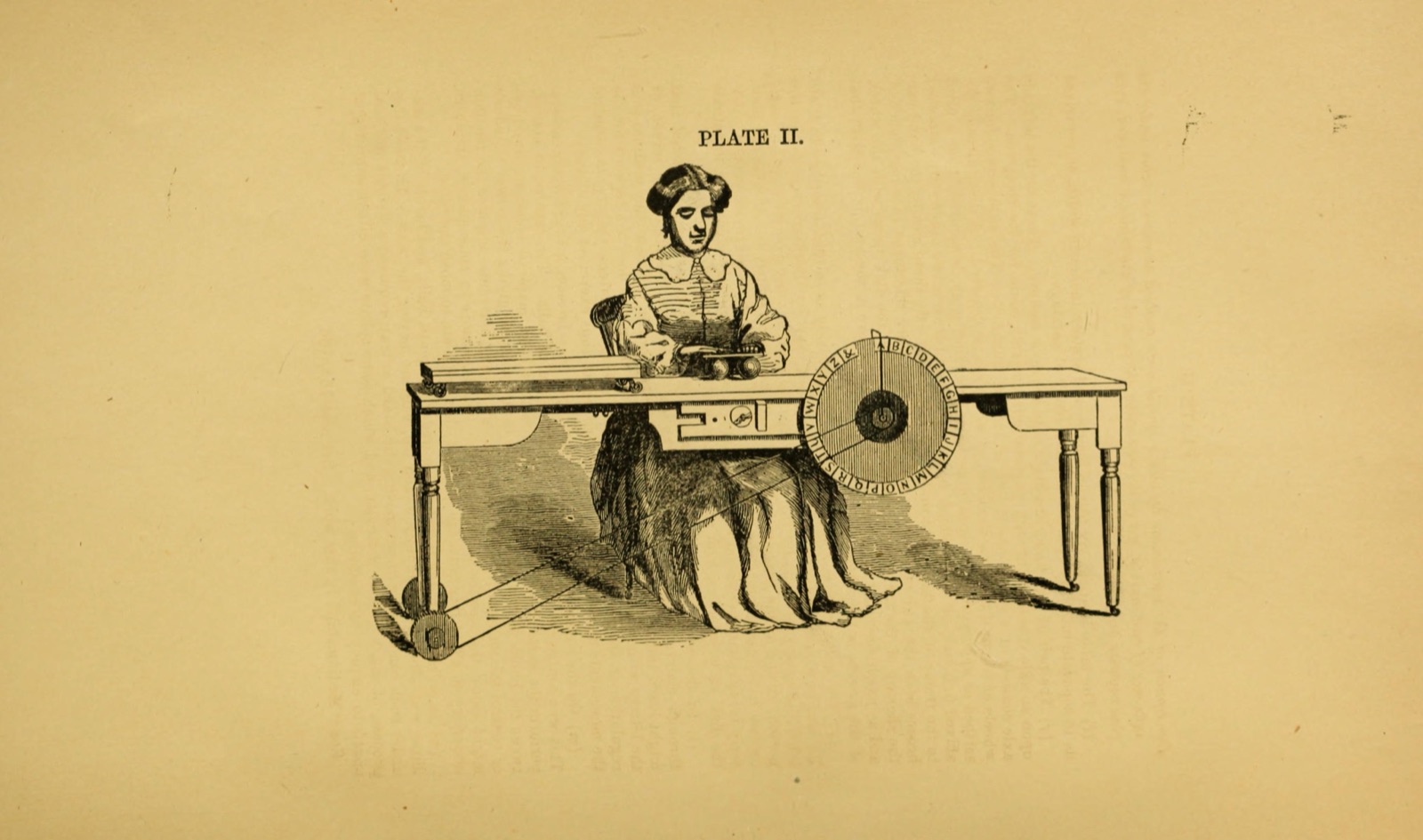
The six-foot table on castors and an axle, the grooved wheel driving the disk by a band, the sitter's hands on a brass plate balanced on two balls. It is on the dial plates page and it belongs here too, because it is the largest, slowest and most demanding thing I make, and because it is the only piece of séance furniture ever designed by a chemist to catch the medium out.
CommissionWhat Does Not Exist
The unnamed instrument
And then there is the piece that does not exist yet. Every year one or two commissions arrive for something I have never made: a board in a script I have never cut, a pointer for a hand that has lost a finger, a dial that reads in a language with no alphabet. These are the commissions I take first. Write, and describe it.